
Shop the range: browse our full bulbs & globes range.
Buying a new globe sounds simple, until you are standing in the lighting aisle staring at codes like E27, B22, GU10 and G9. Each of those codes refers to the bulb's base (also called the cap or fitting), and getting it right is the difference between a globe that clicks straight in and one that will not fit at all.
This guide walks through every common light bulb base used in Australian homes, what each one looks like, and where you will typically find it. For other specifications such as lumens, CRI and colour temperature, see our guide to choosing the right light globe.
How to identify the light bulb you need
Three quick checks will tell you almost everything you need to know:
- Look at the base. Does it screw in (Edison screw), push in and twist (bayonet), or sit on two pins (twist-lock or push-fit)?
- Read the old globe or the fitting. The base code is usually printed on the globe itself or on the original packaging, for example E27 or B22.
- Measure if you are unsure. For most globes, the number after the letter is the base diameter in millimetres. So E14 is 14mm across and E27 is 27mm across.
Light bulb base types at a glance
Use this table for a fast comparison, then scroll down for detail on each type.
| Base code | Family | Size / fitting | Most common uses |
|---|---|---|---|
| E14 | Edison screw | 14mm screw | Lamps, ovens, rangehoods, decorative fittings |
| E27 | Edison screw | 27mm screw | Standard household fittings and lamps |
| B15 | Bayonet | 15mm push-and-twist | Small lamps, appliances, some vehicles |
| B22 | Bayonet | 22mm push-and-twist | Standard household fittings and lamps |
| GU10 | Twist-lock pin | Two pins, 10mm apart, mains voltage | Downlights and spotlights |
| MR16 (GU5.3) | Push-fit pin | Two thin pins, low voltage | Downlights and spotlights (with transformer) |
| G9 | Loop pin | Two looped pins, mains voltage | Wall lights, pendants, decorative fittings |
| G4 | Push-fit pin | Two pins, low voltage | Task and decorative lighting |
| T5 | Fluorescent tube | 16mm diameter tube | Battens, cabinets, display lighting |
| T8 | Fluorescent tube | 26mm diameter tube | Garages, workshops, commercial spaces |
A quick note on bulb technology
The base tells you how a globe connects. The technology inside tells you how it makes light, and that affects running cost, lifespan and brightness:
- LED: the standard today. LEDs use around 75% less energy than halogen globes and last roughly 5 to 10 times longer, which is why almost every base type below is now available in an LED version.
- Halogen and incandescent: the older, power-hungry options. These are being phased out in Australia (more on that below), so most replacements you buy now will be LED.
- Fluorescent (tubes and CFLs): still found in tube fittings, though LED tube replacements are quickly taking over.
The good news is that you rarely have to change your fitting. For nearly every base on this page there is an LED globe that drops straight into your existing socket.
Edison screw globes (E)
The Edison screw (ES) is one of the most common light bulb bases in Australian homes. The globe has a right-hand threaded metal cap that screws into a matching threaded socket. Edison screw globes range widely in size and shape, but the screw base works the same way every time.
On packaging you will see the letter E followed by a number. The E is for Edison and the number is the diameter of the base in millimetres.
E14 globes

An E14 globe is a small Edison screw globe with a 14mm diameter base. It is the most common appliance globe, so you will often find E14 lights in ovens, rangehoods and microwaves. It is also popular for decorative and night lighting, as it gives just enough light to highlight and accentuate without being overbearing.
E27 globes

The E27 globe is the standard Edison screw with a 27mm diameter base. You will find E27 globes most often in lamps and general household light fittings, and they are one of the two most common bases in Australia alongside the B22 bayonet.
Bayonet globes (B)
A bayonet cap globe is fitted by pushing it in and twisting a quarter turn, which locks it into place. This makes the bayonet base a good choice where vibration might loosen a screw-mount globe, which is why you also see it used in vehicles and torches.
B15 globes

The B15 globe is a smaller bayonet cap with a 15mm diameter. Despite its compact size it stays versatile, and you will commonly find B15 globes in small lamps, appliances and some vehicle fittings.
B22 globes

The B22 globe is the standard bayonet-style base with a 22mm diameter. It is one of the most common household globes in Australia, used in ceiling fittings, pendants and table lamps. In LED form, a B22 globe is energy efficient and can last many times longer than the old incandescent globes it replaces.
Pin and twist-lock globes
These globes connect with pins rather than a screw or bayonet cap. They cover most downlights and spotlights, plus many modern wall lights and pendants.
GU10 globes
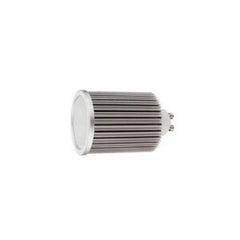
GU10 globes were designed to replace traditional halogen downlights. They have two stubby pins that push in and twist to lock, and they run on mains voltage, so a GU10 does not need a separate transformer or driver to step down to 12V.
GU10 globes come in a range of colour temperatures. Choose a warm white to mimic the glow of an old incandescent, or a cool white for areas where you need to focus, such as kitchens, offices and bathrooms.
MR16 globes (GU5.3)

The MR16 globe is a common downlight and spotlight globe. MR16 describes the reflector, while the base itself is a GU5.3 fitting with two thin push-in pins. Unlike GU10, MR16 globes run on low voltage (usually 12V), so they need a transformer or LED driver.
It is easy to mix up GU10 and MR16 because they look similar. The quick test: GU10 has two fatter pins with rounded tips and twists to lock, while MR16 (GU5.3) has two thin straight pins that simply push in. Buy from trusted brands, as quality varies between cheaper MR16 globes.
G9 globes
The G9 globe is a compact globe with two looped wire pins set about 9mm apart, and it runs on mains voltage. Its small size makes it a favourite for modern wall lights, pendant clusters, bathroom vanities and decorative fittings where a discreet globe is needed. LED G9 globes now offer the same compact shape with a fraction of the heat and energy use of the older halogen capsules.
G4 globes

A G4 globe is a tiny low-voltage capsule with two pins set close together, suited to fittings where space is tight. You will find G4 globes used for task lighting and decorative applications in homes, shops, restaurants and hotels.
Fluorescent tubes (T)
Tube lighting is measured by diameter. The T stands for tubular and the number is the diameter in eighths of an inch, so a larger number means a thicker tube.
T5 tubes

A T5 tube is a slim fluorescent tube about 16mm in diameter. The compact size makes T5 popular for battens, under-cabinet lighting and display fittings. LED T5 replacements are widely available.
T8 tubes

A T8 tube is a thicker fluorescent tube about 26mm in diameter. It often comes in a cool daylight glow, ranging from pure white to a bluish white, and is a workhorse in garages, workshops, commercial spaces and display cases. As with T5, LED T8 tubes are a popular energy-saving swap.
Decorative and festoon globes
Not every globe is about pure function. Carbon filament and vintage-style globes use exposed LED filaments to recreate the warm, golden glow of early Edison bulbs, and they are usually made in standard E27 or B22 bases so they fit ordinary fittings. For outdoor entertaining, festoon lighting strings weatherproof globes along a cable to light up patios, pergolas and backyards. If you want full control from your phone, smart globes let you dim and change colour without rewiring.
Frequently asked questions
How do I know which light bulb I need?
Check the base of your old globe or the fitting itself. The base code (such as E27, B22 or GU10) is usually printed on the globe or its packaging. If it is not, identify whether the base screws in, pushes and twists, or has pins, then measure the base diameter in millimetres and match it to the table above.
What is the difference between E27 and B22?
Both are common standard-size household bases. E27 is an Edison screw that you twist clockwise to screw in. B22 is a bayonet cap that you push in and turn a quarter turn to lock. They are not interchangeable, so check which one your fitting takes.
What is the difference between GU10 and MR16?
GU10 runs on mains voltage and twists to lock, with two fatter pins. MR16 (a GU5.3 base) runs on low voltage and needs a transformer, with two thin push-in pins. They look similar but are not interchangeable.
Can I replace a halogen globe with an LED?
In most cases, yes. For nearly every base type there is a direct LED replacement that fits your existing socket. LEDs use around 75% less energy and last far longer. With low-voltage types such as MR16 and G4 you may need an LED-compatible transformer or driver, and for dimming you may need an LED-compatible dimmer.
Are incandescent and halogen bulbs banned in Australia?
They are being phased out. From 4 October 2025, tungsten filament, carbon filament and halogen incandescent globes covered by the regulations must meet strict new energy efficiency standards that most cannot pass, which effectively stops them being imported or manufactured. Existing stock can still be sold for a limited time. In practice, most replacement globes you buy now are LED. See energyrating.gov.au for the official detail.
What is the most common light bulb base in Australian homes?
The E27 Edison screw and the B22 bayonet are the two most common household bases. GU10 is the most common downlight base.
Why shop with The Lighting Outlet?
The Lighting Outlet stocks a huge range of lighting under one roof, with a superstore in the Eastern Suburbs of Sydney carrying only trusted brands sold in Australia. If you cannot visit in person, our comprehensive online store ships nationwide through a fleet of couriers, so your order arrives fast and hassle-free.
The right globe for every need
Whether you need a bright source for the garage or a soft glow for the bedroom, there is a globe to suit. Light bulbs have come a long way: they are far more energy efficient, last much longer, and come in more types than ever.
In Australia, lighting accounts for roughly 5 to 10% of the average household electricity budget, according to energy.gov.au. As the country phases out older incandescent and halogen globes, modern LEDs use about 75% less energy and last 5 to 10 times longer, which keeps both power bills and replacement costs down.
Ready to shop? Browse the full selection at The Lighting Outlet. Our retail showroom is open six days a week and displays the newest globes in a huge array of styles and sizes. You can also shop by style or filter by brand.


